Enhancing the Where to Buy Experience: Strategies for Brands
.avif)
In today's competitive marketplace, providing a seamless and user-friendly Where to Buy experience is a pivotal factor for brand success. In this guide we’ve outlined essential tactics that brands can leverage to optimize their Where to Buy widget program and drive better performance.
The Where to Buy experience plays a crucial role in guiding potential customers towards making a purchase. It's not just about listing retailers; it's about creating a smooth and informative journey for users. Let's explore key strategies to enhance your brand's "Where to Buy" widget program.
Structuring for Success
To begin, structuring your content effectively is paramount. Let's break down the tactics step by step to ensure clarity and ease of understanding.
1. Widget Types and Advantages
Implementing the right widget type can significantly impact user engagement. There are two primary types: in-line and pop-up widgets. In-line widgets seamlessly integrate with your website, while pop-up widgets offer flexibility in displaying information. Combining both can cater to different user preferences and maximize sales.
In Line Widget
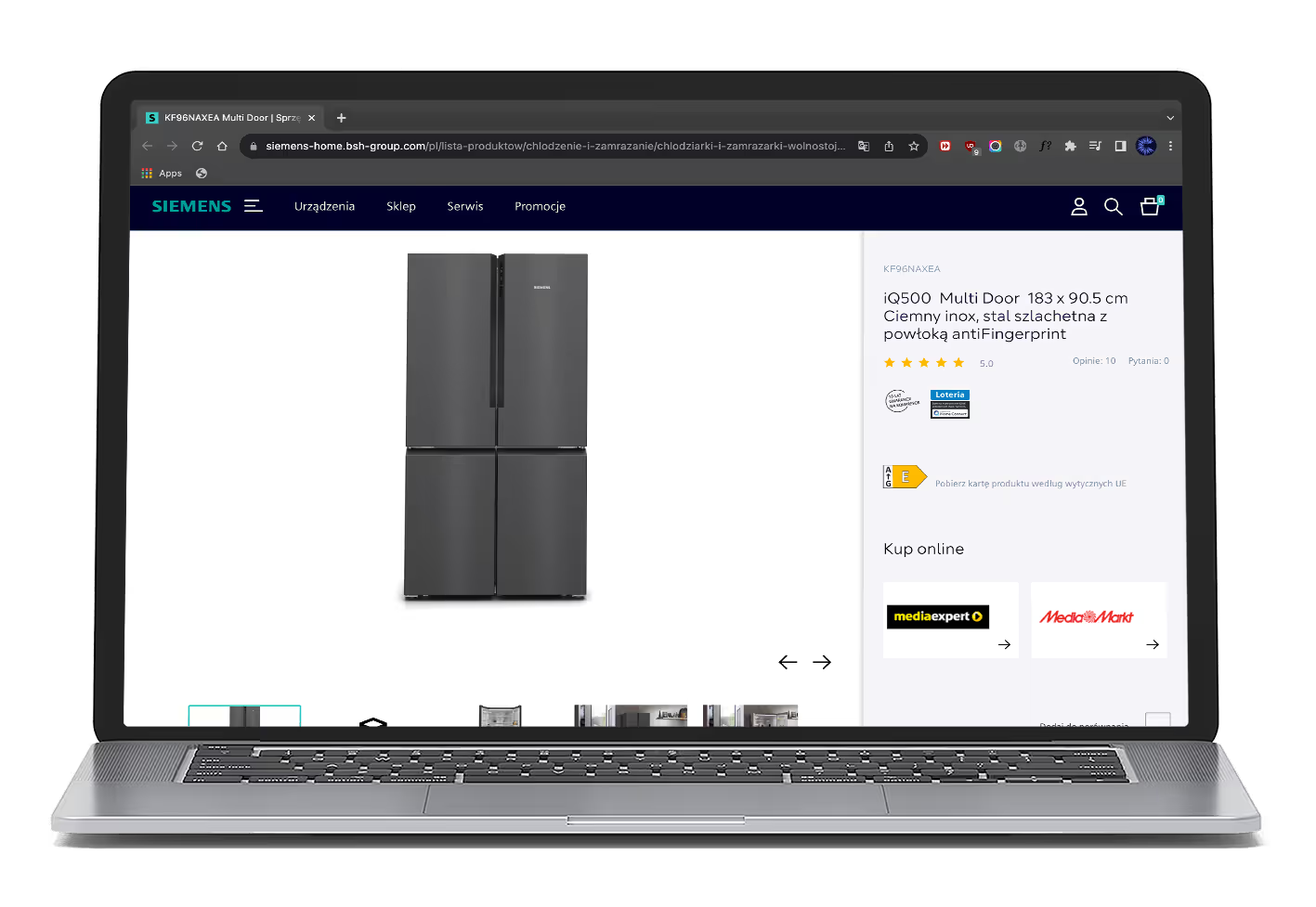
Pop Out Widget
- In-Line Widgets: In-line widgets are embedded directly onto the page and appear as an integral part of your website. As a result they can generate as much as 80% more traffic to retailers*. However, as it is embedded directly within the page, information presented is limited to a retailer logo and your call to action and you must use business rules to limit the number of retailers displayed.
- Pop-Out Widgets: Pop-Out widgets allow you to be more flexible with what is presented and you can include information such as stock, price, and product variants and as a result they generate ~15% higher conversion rates*. It also allows for a single ‘button’ to be placed on the page, and thus has less design implication.
*Based on Internally ChannelSight Data from 2022
2. Maximizing Product Mapping
Product mapping, the connection of products to retailers, is a critical factor. The more products mapped, the higher the visibility for retailers. Strategies to enhance this include:
- Regularly updating your product catalog with the latest offerings.
- Scheduling automatic product updates to ChannelSight.
- Expanding your retailer network to include niche categories and accessories.
- Utilizing product mapping reports to spot and address potential issues.